When a property manager, business owner, HOA, developer, or general contractor requests a Utah paving company commercial estimate, the total price is only part of the information that matters. A professional Utah paving company should provide enough detail for you to understand what work is being proposed, how the pavement will be constructed, and which services are included in the price.
This is especially important when comparing multiple paving estimates. Two proposals may cover the same parking lot but include very different levels of excavation, base preparation, asphalt thickness, drainage work, milling, traffic control, or striping. Looking only at the final price can make those differences easy to miss.
If you are planning a parking lot, private road, HOA, industrial property, retail center, school, church, or other commercial project, learn more about Eckles Paving’s commercial asphalt paving services in Utah or request a free estimate.
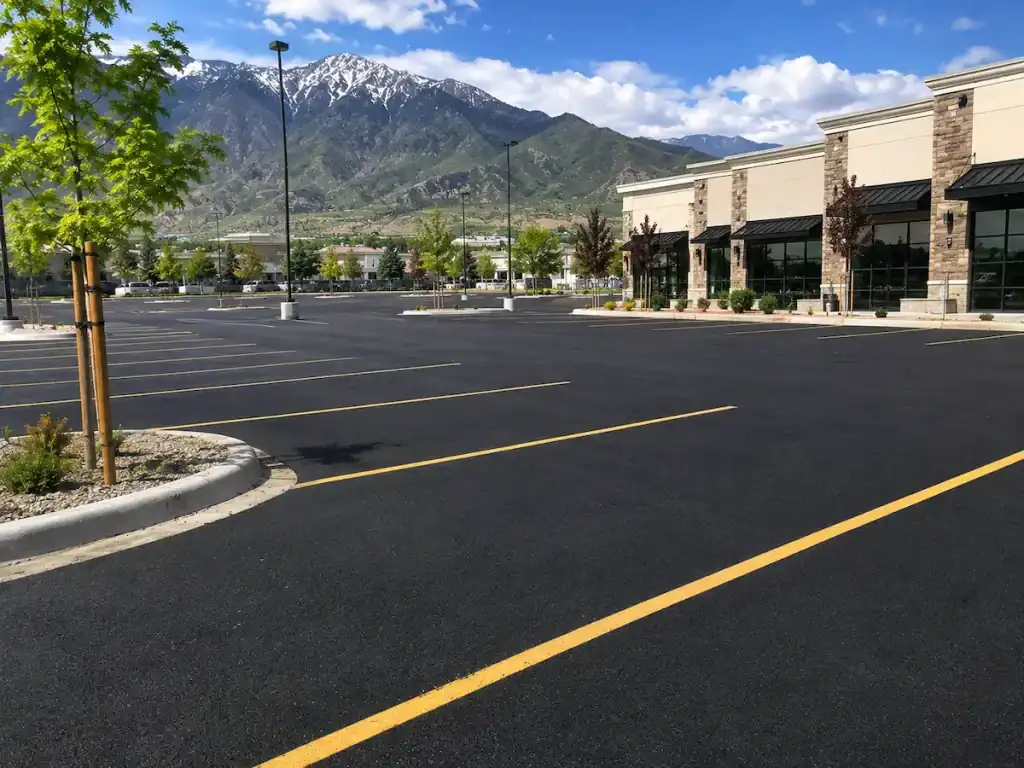
A freshly paved commercial parking lot in Utah.
Why a Detailed Commercial Asphalt Estimate Matters
A good estimate should help you understand what you are paying for. Commercial asphalt projects can involve much more than placing a new layer of pavement.
Depending on the condition of the property, the project may require removing existing asphalt, repairing unstable areas, grading, installing aggregate base, improving drainage, milling, paving, compacting, and restriping the finished surface.
When those details appear clearly in the proposal, property owners can compare contractors based on the actual scope instead of assuming every company is bidding the same project.
A detailed scope also gives the property owner and paving contractor a clearer reference point before construction begins.
1. A Clear Description of the Project Area
A commercial asphalt estimate should clearly identify where work will take place and what areas are included.
Depending on the property, this could include:
- Main parking areas
- Drive aisles
- Loading areas
- Dumpster approaches
- Private roads
- Entrances and exits
- Fire lanes
- Individual repair areas
- Heavy-traffic sections
Large commercial properties sometimes contain areas that need different treatments. One section may require complete reconstruction while another only needs an overlay or localized asphalt repair.
The estimate should make those distinctions clear.
2. Approximate Project Size or Quantities
Commercial paving proposals should provide enough information to establish the approximate size or quantity of the work being performed.
Depending on the project and estimating method, this may include square footage, square yards, tons of asphalt, linear footage, or individual repair quantities.
Clear quantities help property owners understand how the contractor developed the scope and make it easier to compare proposals.
They can also help prevent confusion when only certain portions of a large property are scheduled for work.
3. Existing Asphalt Removal
If existing pavement must be removed, the proposal should explain how that removal will be handled.
Full-depth pavement replacement may require excavation of existing asphalt and, in some cases, removal of unsuitable base or subgrade material beneath it.
Important details can include:
- Approximate removal depth
- Areas scheduled for removal
- Disposal or hauling of removed material
- Whether existing base material will remain
- Whether additional excavation may be necessary if unstable conditions are discovered
Understanding the removal scope is particularly important when comparing a full reconstruction proposal with an overlay or milling project.
4. Milling Requirements
Not every commercial parking lot needs complete excavation. When the existing pavement structure remains suitable, a contractor may recommend milling before installing new asphalt.
Asphalt milling removes a controlled depth of existing pavement and can help maintain appropriate elevations around curbs, gutters, drains, entrances, and concrete.
If milling is included, the estimate should identify where it will occur and why it is part of the project.
Milling may be used throughout an entire area or only around transitions where adding asphalt without removing existing material would create elevation problems.
5. Base Preparation and Aggregate Work
The pavement foundation is one of the most important parts of an asphalt project, even though it will no longer be visible when construction is complete.
A professional Utah paving company should evaluate the existing base and explain significant base preparation included in the proposal.
That may involve:
- Removing unstable material
- Installing aggregate base
- Regrading existing aggregate
- Compacting the subgrade
- Compacting aggregate base
- Repairing soft areas
- Adjusting elevations
Utah properties can have very different soil and base conditions. Proper preparation is particularly important where heavy commercial traffic, moisture, or freeze-thaw cycles place additional stress on the pavement structure.
6. Grading and Finished Elevations
Commercial paving should not be evaluated only by how smooth the finished asphalt looks. The surface also needs to direct water appropriately and connect correctly with surrounding structures.
The estimate should identify significant grading work when it is necessary for the project.
Contractors may need to establish or adjust elevations around:
- Curbs
- Gutters
- Sidewalks
- Building entrances
- Garage entrances
- Loading docks
- Catch basins
- Existing roads
Correct grading helps the finished pavement function as part of the entire property rather than simply creating a new black surface.
7. Drainage Work
Drainage deserves special attention on commercial paving estimates because water can contribute to significant pavement deterioration.
Standing water may enter pavement cracks, weaken the base, and contribute to freeze-thaw damage during Utah winters.
A contractor should evaluate existing drainage before paving and identify major corrections included in the estimate.
Depending on the site, this could involve adjusting slopes, improving low areas, working around catch basins, installing drainage components, or modifying pavement elevations.
Properties with persistent water problems may benefit from dedicated parking lot drainage solutions as part of the project.
8. Asphalt Thickness
One of the most important details to understand when comparing paving proposals is the asphalt thickness being recommended.
The appropriate pavement section depends on several factors, including:
- Expected vehicle traffic
- Heavy truck use
- Existing base conditions
- Soil conditions
- Intended property use
- Existing pavement design
A passenger-vehicle parking area may have different requirements than an industrial yard, loading area, dumpster approach, bus route, or warehouse receiving regular tractor-trailer traffic.
Rather than assuming every part of a property should receive the same pavement section, ask the contractor how the proposed asphalt structure relates to expected traffic.
9. Asphalt Placement and Compaction
The estimate should make clear that asphalt placement and compaction are part of the proposed paving scope.
Commercial asphalt must be placed and compacted while the material remains within an appropriate working temperature range. Contractors coordinate pavers, rollers, trucks, and crews to keep the paving operation moving consistently.
Proper compaction helps create a dense pavement structure and is an important part of long-term performance.
The contractor’s equipment should also match the scale of the job. Larger parking lots and commercial sites often require greater paving and rolling capacity than smaller residential projects.
Property owners interested in this part of the process can read our guide to asphalt paving contractor equipment.
10. Tack Coat When Required
When new asphalt is installed over an existing asphalt surface or between appropriate pavement layers, a tack coat may be used to help create a bond.
The exact application depends on the pavement design and construction method, but property owners comparing overlay proposals should understand whether surface preparation and bonding materials are part of the scope.
This is another example of why two estimates with different prices may not represent identical construction methods.
11. Transitions and Tie-In Areas
Commercial parking lots contain numerous locations where new asphalt must meet existing surfaces.
These can include:
- Public streets
- Existing asphalt
- Concrete gutters
- Sidewalks
- Loading areas
- Garage entrances
- Utility structures
A commercial estimate should account for significant transitions so the finished pavement connects properly with surrounding surfaces.
Milling, saw cutting, grading, or other preparation may be needed depending on the existing elevations.
12. Parking Lot Striping
If a parking lot is being resurfaced or reconstructed, existing pavement markings may need to be replaced after paving.
The proposal should specify whether commercial parking lot striping is included or will be completed under a separate scope.
Striping may include parking stalls, accessible parking spaces, directional markings, fire lanes, loading zones, crosswalks, and other pavement markings required for the property.
Knowing whether striping is included prevents property owners from discovering an additional cost after paving is complete.
13. Project Phasing and Property Access
For many commercial properties, project phasing can be just as important as the paving itself.
Retail centers, apartment communities, industrial facilities, medical properties, offices, schools, and other active sites may not be able to close the entire property during construction.
A commercial paving estimate or accompanying project plan should explain major access considerations when they affect the scope.
This may include:
- Dividing the property into phases
- Maintaining temporary entrances
- Providing alternate parking
- Coordinating tenant access
- Maintaining delivery routes
- Scheduling work around operating hours
Phasing can affect project cost because it may change mobilization, production, traffic control, and crew scheduling requirements.
14. Traffic Control and Safety Requirements
Some commercial paving projects require temporary traffic control to separate construction equipment from customers, employees, residents, or other vehicles.
Depending on the site, contractors may use cones, barricades, temporary signs, spotters, or alternate traffic routes.
If extensive traffic management is required, the estimate should clarify whether that work is included.
Properties with heavy public traffic or complicated access patterns may require more planning than a site that can be closed completely during construction.
15. Mobilization and Equipment Requirements
Commercial paving requires transporting heavy equipment and crews to the property. Depending on project size and location, mobilization can represent a meaningful part of the work.
Large projects may require pavers, rollers, milling equipment, skid steers, graders, excavators, loaders, and multiple trucks.
Properties with difficult access, remote locations, or several construction phases may require additional mobilization.
Whether mobilization appears as a separate line item or is incorporated into the overall price, property owners should understand what the estimate includes.
16. What Is Not Included in the Estimate
A useful commercial asphalt proposal should also make important exclusions clear.
For example, the estimate may exclude utility repairs, unforeseen underground conditions, concrete replacement, landscaping restoration, permits, engineering, or additional base reconstruction discovered after excavation.
Clear exclusions do not necessarily indicate a problem. They help establish expectations before construction begins and make it easier to determine whether competing bids actually cover the same work.
How to Compare Two Commercial Asphalt Estimates
When comparing bids, avoid placing the proposals side by side and looking only at the total price.
Instead, compare the major construction components:
- Are they paving the same area?
- Is the removal depth comparable?
- Does each proposal include the same base preparation?
- Is the asphalt thickness comparable?
- Does either contractor include milling?
- Are drainage corrections included?
- Is striping included?
- How will the property remain accessible?
- Are traffic control and mobilization included?
- What important exclusions appear in each proposal?
If one proposal is substantially lower, determine why before making a decision. The contractor may have identified a more efficient construction method, but the difference could also result from a reduced scope.
Understanding the reason is more useful than assuming the least expensive proposal is automatically the best value.
Why Commercial Asphalt Estimates Can Vary So Much
It is normal for commercial asphalt estimates to vary because contractors may evaluate the same property differently.
One company may recommend full reconstruction while another believes the existing base is suitable for an overlay. Contractors may also recommend different repair areas, pavement thicknesses, drainage improvements, or project phases.
Other pricing factors can include:
- Project size
- Asphalt quantities
- Aggregate requirements
- Site accessibility
- Hauling distance
- Existing pavement condition
- Equipment requirements
- Traffic management
- Drainage work
- Seasonal scheduling
The goal should not necessarily be to find identical prices. It should be to understand which proposal provides an appropriate solution for the property.
Should a Paving Company Inspect the Property Before Estimating?
For substantial commercial projects, an on-site evaluation can provide important information that measurements alone may not reveal.
A contractor can inspect existing cracking, potholes, settlement, drainage patterns, transitions, access limitations, pavement failures, and other conditions that affect the recommended scope.
Some problems visible at the surface may indicate deeper issues. For example, repeated pavement failure in one area may result from an unstable base or drainage problem rather than simply worn asphalt.
An experienced contractor should evaluate the cause of significant failures before recommending how to address them.
What Questions Should You Ask About a Commercial Asphalt Estimate?
Property owners do not need to be pavement engineers to ask useful questions about a proposal.
Consider asking:
- Why are you recommending this type of pavement work?
- What preparation is included?
- How will soft or unstable areas be handled?
- What asphalt thickness is included?
- How will drainage be addressed?
- Does the project require milling?
- How will access be maintained?
- Is parking lot striping included?
- What conditions could result in additional work?
- How will schedule changes be communicated?
A professional Utah paving company should be able to explain its recommendations in straightforward terms.
Plan for Maintenance After the Paving Project
A commercial paving estimate primarily addresses the current construction project, but property owners should also think about long-term pavement maintenance.
Utah asphalt faces freeze-thaw cycles, snowplow activity, heavy traffic, summer heat, and UV exposure. Over time, pavement may develop cracks, surface wear, isolated failures, or faded markings.
Services such as crack sealing, sealcoating, localized repairs, and restriping can become part of a long-term maintenance strategy.
Additional information about pavement construction and maintenance is available through Eckles Paving’s asphalt paving tips and resources.
Why Choose Eckles Paving?
Eckles Paving has more than 35 years of experience providing asphalt paving and pavement maintenance throughout Utah.
Our crews work with commercial property owners, property managers, HOAs, general contractors, developers, industrial facilities, schools, churches, municipalities, apartment communities, and other organizations throughout the state.
Eckles Paving is licensed and insured, with experienced paving crews, professional equipment, large-project capabilities, and expertise in grading and drainage. Our services include asphalt paving, asphalt repair, milling, patching, crack sealing, sealcoating, parking lot striping, and other pavement solutions.
Eckles Paving has also earned more than 1,300 five-star reviews and maintains a 5.0 Google rating.
Learn more about Eckles Paving and our experience completing Utah asphalt projects.
Commercial Asphalt Paving Areas We Serve
Eckles Paving provides commercial paving and pavement maintenance throughout much of Utah, including Utah County, Salt Lake County, Davis County, Weber County, Cache County, Summit County, Wasatch County, Tooele County, Morgan County, and Box Elder County.
Our service areas include Mapleton and surrounding Utah County communities, Salt Lake City, West Valley City, Park City, Heber, Ogden, Logan, and many other locations throughout the state.
Visit our Utah asphalt service areas page for additional information about where Eckles Paving works.
Frequently Asked Questions
What should a Utah paving company include in a commercial asphalt estimate?
A commercial asphalt estimate should clearly explain the project area, preparation, removal or milling, base work, asphalt installation, thickness, drainage considerations, project phasing, and other included services. Important exclusions should also be identified so the property owner understands the complete scope.
Why are commercial asphalt paving estimates sometimes very different?
Contractors may recommend different construction methods, asphalt thicknesses, repair areas, base preparation, drainage improvements, or project phases. Compare the scope of each proposal before comparing the final prices.
Should asphalt thickness appear in a commercial paving estimate?
The proposal should provide enough information for the customer to understand the pavement section being recommended. Asphalt requirements depend on traffic loads, existing conditions, base materials, and how the property will be used.
Is parking lot striping normally included in a paving estimate?
It depends on the contractor and project. If striping is needed, confirm whether it is included in the paving proposal or quoted separately before construction begins.
Should I choose the lowest commercial asphalt bid?
Not based on price alone. First determine whether the proposals include comparable preparation, materials, asphalt thickness, drainage work, milling, striping, and project coordination. A lower price can represent good value, but only when the proposed scope meets the property’s needs.
Can a Utah paving company estimate a commercial project without visiting the property?
Measurements and project documents can provide useful information, but an on-site evaluation is often valuable for substantial commercial projects. A site visit allows the contractor to evaluate pavement failures, drainage, access, transitions, and other conditions that may affect the scope.
Request a Free Commercial Asphalt Estimate
If you are planning a parking lot, private road, HOA project, industrial property, apartment community, retail center, school, church, or other commercial asphalt project, Eckles Paving can evaluate the property and recommend an appropriate paving approach.
Contact Eckles Paving for a free estimate and speak with an experienced Utah paving company about your commercial asphalt project.
Industry Resources
- Asphalt Institute — Educational and technical information about asphalt pavement materials, construction, design, and maintenance.
- Federal Highway Administration Pavements — Federal resources covering pavement materials, construction, engineering, preservation, and performance.
- American Public Works Association — Industry resources related to infrastructure construction, transportation, maintenance, and public works.