Working along a busy interstate requires more than asphalt paving equipment. It takes careful planning, organized traffic management, and a crew that can complete the work efficiently. In May 2026, Eckles Paving completed an asphalt removal and replacement project along I-15 in Mona, Utah, where managing traffic and maintaining an organized work area were important parts of the job.
Our crew coordinated traffic around the work area and worked efficiently to remove damaged asphalt and replace it with new pavement. The project demonstrates how experienced asphalt contractors can complete roadway repairs in high-traffic environments while keeping safety, organization, and efficiency at the center of the process.
Eckles Paving provides asphalt repair, asphalt paving, and roadway maintenance services throughout Utah.
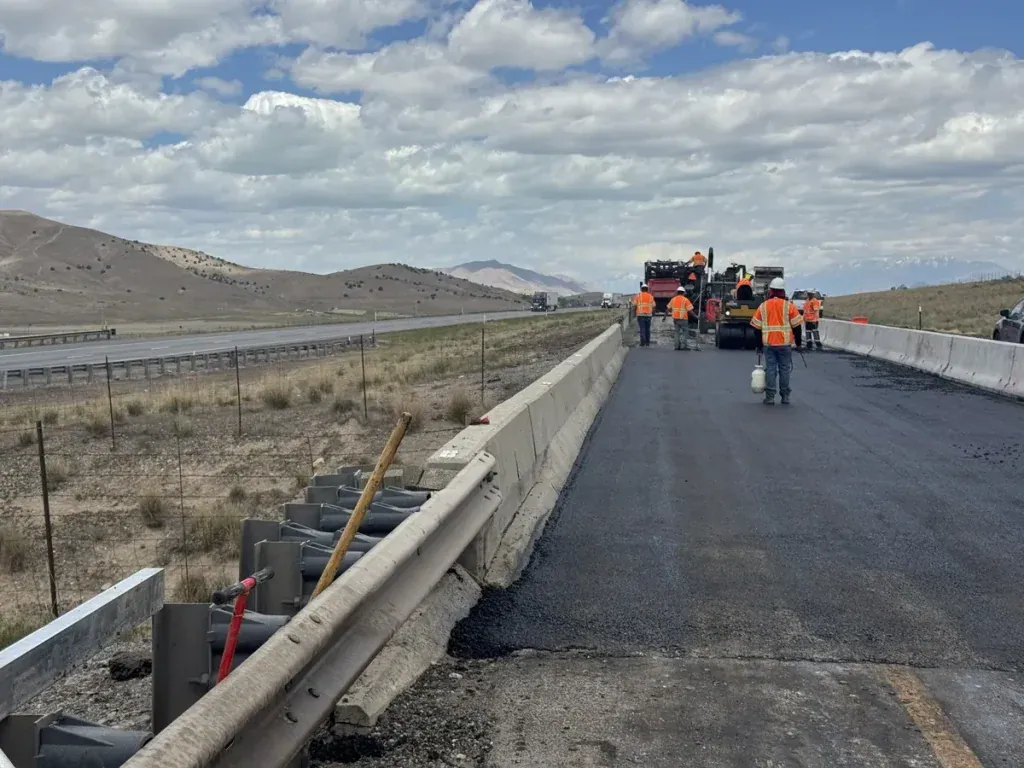
The Eckles Paving crew installs new asphalt along I-15 in Mona, Utah.
I-15 Asphalt Removal and Replacement Project Overview
Interstate 15 is one of Utah’s major transportation corridors, carrying passenger vehicles, commercial trucks, and other traffic through communities across the state. Working near this type of roadway requires a different approach than paving a driveway or a small parking lot.
For our May 2026 project in Mona, Utah, the Eckles Paving crew focused on removing and replacing asphalt while organizing traffic around the work area.
- Project Location: Along I-15 in Mona, Utah
- Project Date: May 2026
- Services Performed: Asphalt removal and replacement
- Project Environment: High-traffic interstate corridor
- Key Priorities: Traffic coordination, organized work areas, and efficient project completion
The goal was to complete the necessary asphalt work while managing the challenges associated with an active, heavily traveled transportation corridor.
Organizing Traffic Around an Active Roadway Project
One of the most important parts of this project was coordinating traffic around the construction area.
Unlike work on a closed commercial property, interstate projects must account for vehicles moving through or near the work zone. Crews need a clear plan for separating construction activity from surrounding traffic and organizing access for equipment and workers.
During the I-15 project in Mona, traffic was reorganized around the work area so our crew could complete the asphalt removal and replacement in a controlled environment.
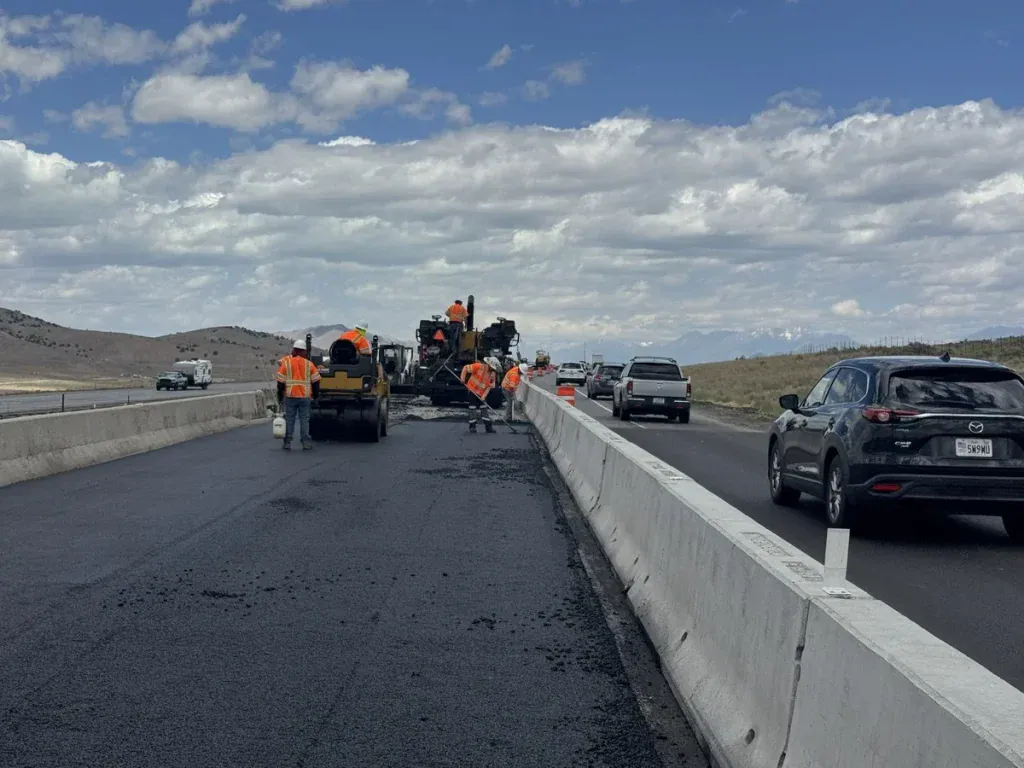
The Eckles Paving efficiently organizes traffic along the freeway.
Why Traffic Organization Matters
Effective traffic coordination supports several important goals during roadway construction:
- Worker safety: Establishing clear boundaries between construction activities and surrounding traffic.
- Driver awareness: Helping motorists understand how to navigate the affected area.
- Equipment access: Allowing construction equipment and trucks to move through the work area in an organized manner.
- Efficient operations: Reducing unnecessary interruptions that can slow down asphalt removal and paving.
- Reduced disruption: Planning the work to limit avoidable impacts on roadway users.
For high-traffic projects, traffic management and construction scheduling need to work together. An organized work zone helps crews focus on completing the asphalt repairs without unnecessary delays.
Removing Existing Asphalt Along I-15
The first major part of the pavement work involved removing existing asphalt from the areas requiring replacement.
Asphalt removal and replacement is a common repair method when pavement needs more than surface maintenance. Instead of simply applying a new treatment over the existing asphalt, crews remove the affected pavement and prepare the area for new material.
Depending on the condition of the pavement, removal and replacement can address problems such as:
- Cracked or deteriorated asphalt
- Areas with significant surface damage
- Pavement that requires more extensive repair than crack sealing or sealcoating
- Localized sections that need new asphalt to restore the roadway surface
The appropriate repair method depends on the condition of the asphalt and the underlying pavement structure.
Learn more about the differences between pavement treatments in our guide to sealcoating, resurfacing, and asphalt replacement.
Replacing Removed Asphalt With New Pavement
After removing the existing asphalt, the next stage was replacing it with new pavement.
Successful asphalt replacement involves more than placing fresh material in an opening. Crews must consider the condition of the prepared area, the thickness required for the application, and proper compaction.
These factors are particularly important on roadways that experience regular vehicle traffic and heavy commercial loads.
Preparing the Area for New Asphalt
Before paving, the work area must be suitable for the new asphalt. Depending on the repair, this may include checking the exposed base, removing loose material, and preparing the surrounding pavement edges.
A stable foundation helps support the new pavement and reduces the risk of premature deterioration.
Placing and Compacting the Asphalt
Once the area is ready, crews place the new asphalt and compact it to achieve the required density and finish.
Proper compaction is essential because it helps the asphalt withstand traffic loads and limits excessive air voids that can contribute to premature pavement damage.
For more information, read our article about how asphalt thickness is determined for different projects.
Working Efficiently in a High-Traffic Environment
Efficiency was another important priority during the I-15 project in Mona.
Roadway construction affects more than the immediate work area. Delays can influence surrounding traffic, equipment scheduling, and the overall construction timeline.
Our crew worked quickly and kept the project organized to complete the necessary asphalt removal and replacement.
For projects like this, efficiency comes from coordinating the different parts of the operation rather than simply rushing through the paving process.
Important considerations include:
- Planning equipment and material needs before work begins
- Coordinating asphalt removal and replacement activities
- Keeping construction vehicles and equipment organized
- Managing traffic around the active work area
- Maintaining communication among crew members
- Completing each stage of work in the appropriate sequence
An experienced crew can use this type of planning to reduce unnecessary downtime while maintaining attention to the quality of the finished pavement.
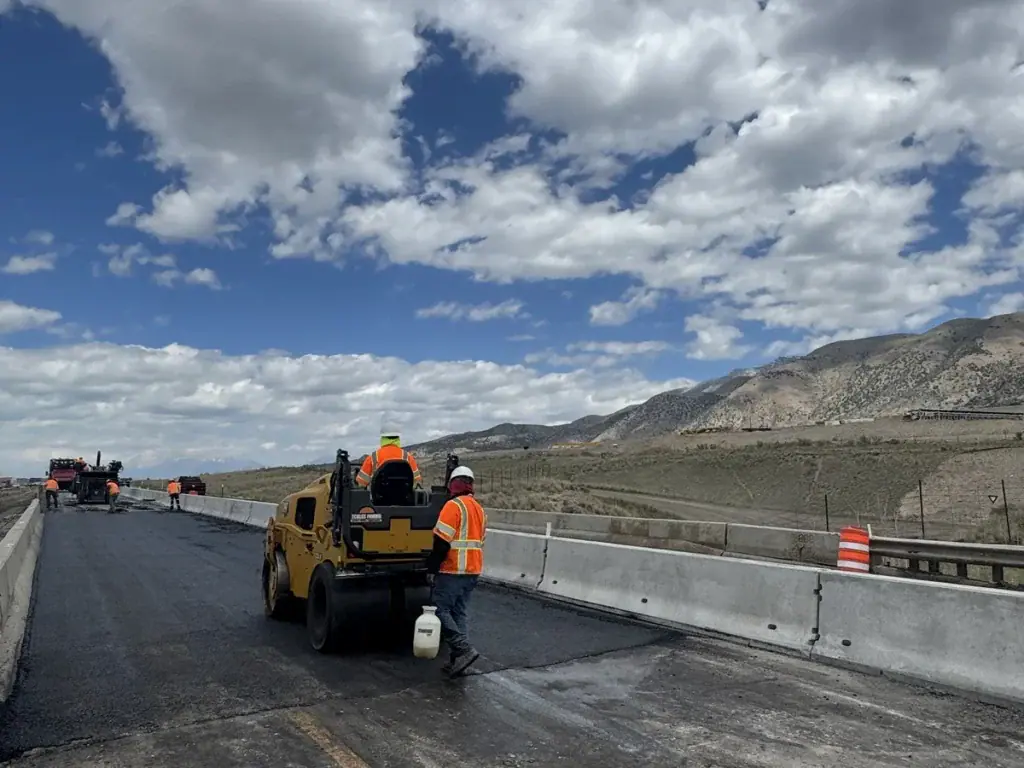
The Eckles Paving crew compacts new asphalt along I-15 in Mona.
Why Interstate Asphalt Repairs Require Specialized Planning
Highway and interstate paving projects present challenges that are less common on smaller asphalt jobs.
High Traffic Volumes
Interstate corridors carry a steady mix of passenger vehicles and commercial traffic. Construction planning must account for how that traffic moves around the work area.
Heavy Vehicle Loads
Commercial trucks place significant demands on pavement. Proper repair methods, asphalt thickness, base conditions, and compaction all contribute to roadway performance.
Equipment Coordination
Asphalt removal and replacement can involve multiple pieces of equipment working within a limited area. Organizing those operations helps crews maintain productivity.
Work Zone Safety
Construction near moving traffic requires careful attention to work zone boundaries, visibility, and the approved traffic control arrangement.
These considerations make roadway asphalt repair a job that benefits from experienced crews, professional equipment, and thoughtful project planning.
Why May Is a Good Time for Asphalt Work in Utah
The I-15 project took place in May 2026, during Utah’s spring paving season.
Spring often provides opportunities for asphalt construction as temperatures become warmer and weather conditions become more favorable for paving.
However, asphalt installation still depends on actual site conditions. Air temperature, pavement temperature, precipitation, wind, and the type of asphalt work can all influence scheduling.
In areas such as Mona and Juab County, spring weather can still change quickly. Contractors need to account for those conditions when planning pavement removal and replacement.
Learn more in our guide to the best time of year for asphalt installation in Utah.
Asphalt Removal and Replacement vs. Surface Maintenance
Not every damaged roadway needs complete asphalt replacement. The appropriate repair depends on the severity and cause of the pavement problem.
Some asphalt surfaces can benefit from preventive maintenance, while others require more substantial repairs.
- Crack sealing: Helps limit water intrusion through appropriate pavement cracks.
- Sealcoating: Provides surface protection for asphalt that remains in maintainable condition.
- Asphalt patching: Repairs localized areas of damaged pavement.
- Asphalt milling and resurfacing: Removes a controlled depth of existing pavement before installing a new asphalt layer.
- Removal and replacement: Removes affected pavement and installs new asphalt where more substantial repair is necessary.
Choosing the right treatment helps property owners and project managers avoid applying temporary surface treatments to pavement that needs structural attention.
Learn more about asphalt milling and professional asphalt repair services.
Supporting Utah’s Transportation Infrastructure
Reliable roads are important for Utah communities, businesses, freight transportation, and everyday travel.
Projects along major routes such as I-15 require crews that understand the importance of coordinating pavement work around ongoing traffic.
The Mona project is one example of how Eckles Paving approaches roadway work with an emphasis on organization, efficient construction, and professional asphalt repair.
Our experience also extends to commercial parking lots, industrial facilities, municipal properties, private roads, and other asphalt applications throughout Utah.
Frequently Asked Questions
What did Eckles Paving do along I-15 in Mona, Utah?
In May 2026, Eckles Paving completed asphalt removal and replacement along the I-15 corridor in Mona, Utah. The project also involved organizing traffic around the work area to support efficient construction.
When was the I-15 Mona asphalt project completed?
The project took place in May 2026.
What is asphalt removal and replacement?
Asphalt removal and replacement involves removing existing pavement from an area and installing new asphalt. Contractors use this method when the existing pavement requires more substantial repair than a surface treatment can provide.
Why is traffic coordination important during highway paving?
Traffic coordination helps separate construction activity from moving vehicles, organize equipment access, and reduce unnecessary disruptions around an active work zone.
Can asphalt removal and replacement be completed on busy roads?
Yes. With appropriate traffic control planning, equipment, scheduling, and experienced crews, asphalt removal and replacement can be completed along active transportation corridors.
Does Eckles Paving provide asphalt repair for commercial and municipal projects?
Yes. Eckles Paving provides asphalt paving, repair, removal and replacement, milling, grading, and other pavement services for commercial, industrial, municipal, and private properties throughout Utah.
Why Choose Eckles Paving for Roadway Asphalt Projects?
With more than 35 years of experience, Eckles Paving has the equipment and crews to complete asphalt projects across Utah, from commercial parking lots to roadway repairs.
Our team understands the importance of planning around active traffic, coordinating equipment, and completing asphalt work efficiently.
Eckles Paving is licensed and insured and has earned more than 1,300 five-star reviews.
Learn more about Eckles Paving and our experience serving Utah.
Asphalt Paving and Repair in Mona, Juab County, and Throughout Utah
Eckles Paving provides asphalt paving and maintenance services for projects throughout Utah, including Mona, Nephi, Juab County, Utah County, Salt Lake County, and surrounding communities.
Whether a project involves a roadway, industrial facility, commercial parking lot, or private property, our team can evaluate the pavement and recommend appropriate services.
Explore our Utah asphalt service areas to learn more.
Related Asphalt Resources
- Should You Sealcoat, Resurface, or Replace Asphalt?
- How Asphalt Is Planned for Heavy Truck Traffic
- How Thick Should Asphalt Be?
- What Are Asphalt Millings?
- Best Time of Year for Asphalt Installation in Utah
Visit our asphalt paving tips and resources for additional information about asphalt construction, repairs, and maintenance.
Request a Free Asphalt Paving or Repair Estimate
Planning an asphalt repair, roadway paving, or removal and replacement project in Utah? Eckles Paving can help evaluate your pavement needs and determine an appropriate approach.
Contact Eckles Paving to request a free estimate.
Industry Resources
- Federal Highway Administration — Resources related to roadway construction, work zones, and pavement management.
- Asphalt Institute — Technical information about asphalt pavement construction, repair, and maintenance.
- American Public Works Association — Professional resources related to public infrastructure and construction.