When asphalt starts looking worn, cracked, or uneven, property owners often face the same question: should I sealcoat, resurface, or replace my asphalt? The right answer depends on the condition of the pavement, the type of damage, the strength of the underlying base, drainage conditions, traffic, and how much useful life remains in the existing asphalt.
These three options serve very different purposes. Sealcoating is a surface maintenance treatment. Resurfacing adds a new asphalt layer over pavement that still has enough structural support. Replacement removes and rebuilds pavement that is too damaged or unstable for surface treatments to solve.
For Utah property owners, the decision also needs to account for freeze-thaw cycles, snow and ice, UV exposure, heavy traffic, drainage problems, and seasonal temperature changes. A qualified contractor should inspect the pavement before recommending the most appropriate approach.
If you are comparing options for a parking lot, private road, HOA, commercial property, industrial facility, school, church, or driveway, Eckles Paving provides complete asphalt services throughout Utah. You can also request a free estimate.

An asphalt contractor evaluates pavement damage.
What Is the Difference Between Sealcoating, Resurfacing, and Replacement?
The biggest difference is how deeply each service addresses the pavement.
- Sealcoating treats the surface of asphalt that is still structurally sound.
- Resurfacing installs a new asphalt layer over an existing pavement structure that remains suitable.
- Replacement removes failed pavement and rebuilds the section when the existing structure is no longer dependable.
Choosing the wrong treatment can lead to wasted money. Sealcoating cannot fix structural failure, and resurfacing may not be appropriate if the pavement underneath is badly damaged.
When Sealcoating Makes Sense
Asphalt sealcoating is a preventive maintenance treatment for pavement that is still in reasonably good structural condition.
Sealcoating may be appropriate when the asphalt has:
- Surface fading
- Oxidation
- Minor weathering
- Suitable cracks that can be sealed first
- No widespread base failure
- No major rutting or settlement
Sealcoat can help protect the surface from additional weathering and restore a darker, more uniform appearance. Property owners who want to better understand how sealcoating fits into a maintenance plan can also read our guide on how often asphalt should be sealcoated in Utah.

A crew applies fresh sealcoat to a commercial parking lot in Utah.
When Sealcoating Is Not Enough
Sealcoating is not designed to repair potholes, failed base material, deep settlement, or widespread structural cracking.
If the pavement has problems such as:
- Alligator cracking
- Large potholes
- Deep rutting
- Sunken pavement
- Loose or broken asphalt
- Recurring failed patches
- Standing water caused by settlement
then the property may need asphalt repair, resurfacing, or replacement instead.
Sealcoating over badly failed pavement may improve appearance temporarily, but it does not correct the underlying problem. This distinction is also important when comparing asphalt sealcoating vs. crack sealing in Utah, since neither treatment is intended to rebuild structurally failed pavement.
When Resurfacing Makes Sense
Resurfacing can be a good option when the pavement surface is worn or deteriorated but the underlying pavement structure and base remain stable.
The process often involves preparing the existing pavement, completing necessary repairs, and installing a new asphalt layer over the surface.
Depending on the property, asphalt milling may be used first to remove a controlled depth of old pavement and maintain proper elevations.
Resurfacing may be appropriate when the pavement has:
- Moderate surface cracking
- General wear
- Oxidation
- Shallow surface deterioration
- Localized repairs that can be completed first
- A stable base underneath
A contractor should confirm that the pavement underneath is suitable before recommending an overlay.
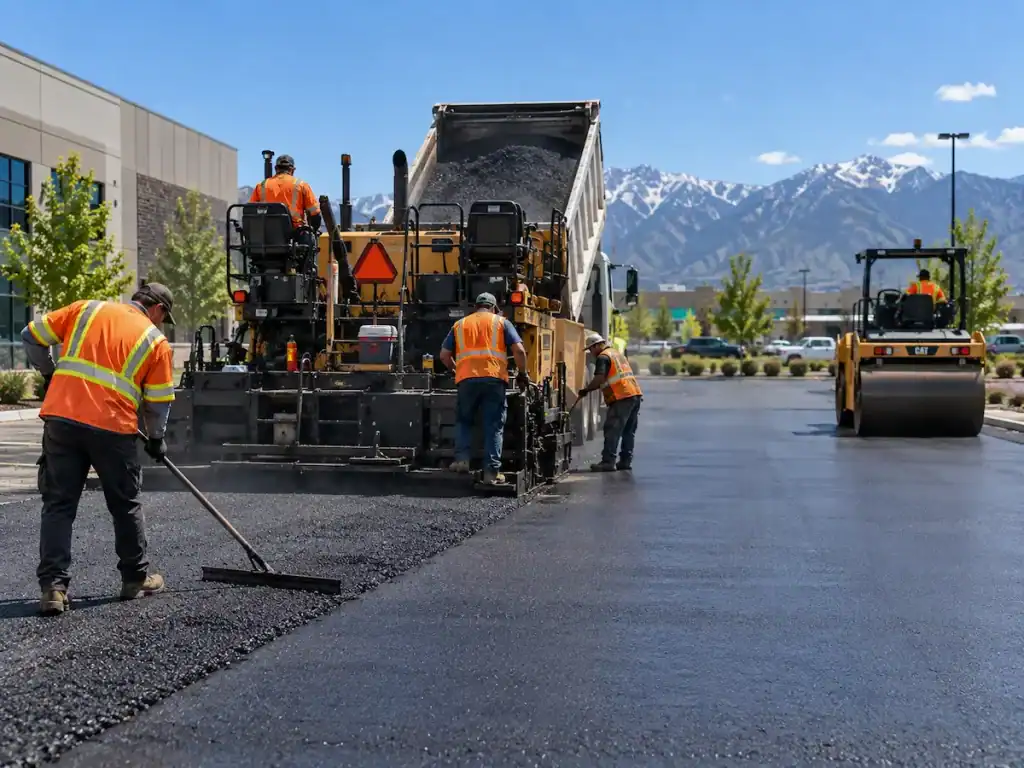
A crew installs a new asphalt surface in Utah.
What Is an Asphalt Overlay?
An asphalt overlay is a new layer of asphalt installed over an existing pavement surface.
Before the overlay is placed, crews may need to:
- Repair failed areas
- Address cracks as appropriate
- Mill selected areas
- Clean the pavement
- Apply tack coat
- Correct transitions
The existing pavement then becomes part of the support system for the new asphalt. This is why overlays are most effective when the underlying pavement still has enough structural integrity to support the new surface.
Why Milling Is Often Used Before Resurfacing
Installing new asphalt directly over old pavement raises the finished elevation.
That can create problems around:
- Curbs
- Gutters
- Catch basins
- Concrete
- Building entrances
- Sidewalks
- Roadway transitions
Milling removes some of the existing asphalt so crews can install the new layer while maintaining appropriate elevations. It can also remove deteriorated surface material and improve transitions before paving.
When Asphalt Replacement Is the Better Choice
Replacement is generally considered when the pavement has widespread structural failure or the materials underneath the asphalt can no longer provide reliable support.
Signs that replacement may be necessary include:
- Widespread alligator cracking
- Severe rutting
- Repeated potholes across large areas
- Extensive settlement
- Large sections of failed base
- Repeated repairs that continue to fail
- Major drainage problems
- Very deteriorated pavement with little structural value remaining
In these situations, resurfacing may simply cover problems that continue underneath the new asphalt. Full replacement allows crews to remove failed materials and rebuild the pavement from the foundation upward.
What Happens During Asphalt Replacement?
A full replacement project may include:
- Removing existing asphalt
- Excavating unstable material
- Evaluating the subgrade
- Installing or rebuilding aggregate base
- Compacting the foundation
- Correcting grades
- Improving drainage
- Installing new asphalt
- Compacting the finished pavement
Professional grading services can be particularly important when the existing pavement has settlement or drainage problems.

A crew removes asphalt before rebuilding and the area.
Cracking Patterns Can Help Determine the Right Treatment
Not all cracks mean the same thing.
A few individual cracks may be appropriate for professional crack sealing. Widespread interconnected cracks, often called alligator cracking, can indicate structural failure underneath the surface.
If the cracking is caused by weak base material, applying sealcoat or another surface layer may not solve the problem. A contractor should evaluate both the crack pattern and the surrounding pavement before recommending treatment.
For a closer look at the difference between these two maintenance treatments, see our article Asphalt Sealcoating vs. Asphalt Crack Sealing in Utah.
Potholes Usually Require Repair Before Other Treatments
Potholes should not simply be covered with sealcoat or an overlay without evaluation.
A pothole can indicate that water and traffic have already damaged the pavement structure. Depending on the condition, crews may need to remove the failed area, rebuild the base, compact the repair, and install new asphalt.
Asphalt patching and pothole repair may be completed before resurfacing or other pavement maintenance.
Standing Water Can Change the Recommendation
Drainage is one of the most important factors when deciding whether to sealcoat, resurface, or replace pavement.
Standing water may indicate:
- Low spots
- Settlement
- Improper grading
- Rutting
- Base failure
- Drainage structure problems
Sealcoating will not fix these conditions. An overlay may also be inappropriate if the underlying drainage problem is not corrected first.
Properties with recurring water issues may require parking lot drainage improvements as part of the project.
How Utah Weather Affects the Decision
Utah’s seasonal temperature changes can worsen existing pavement weaknesses. Water can enter cracks or failed areas, freeze during colder weather, expand, and contribute to additional deterioration as temperatures rise and fall.
Summer conditions matter as well. Strong UV exposure contributes to oxidation and gradual surface aging. Snow, ice, snowplows, moisture, and changing temperatures can place additional stress on already weakened pavement.
Pavement with minor surface aging may still be a good candidate for maintenance, while pavement with significant moisture-related structural failure may require more extensive work. Learn more about these conditions in our guide to how Utah weather damages asphalt.
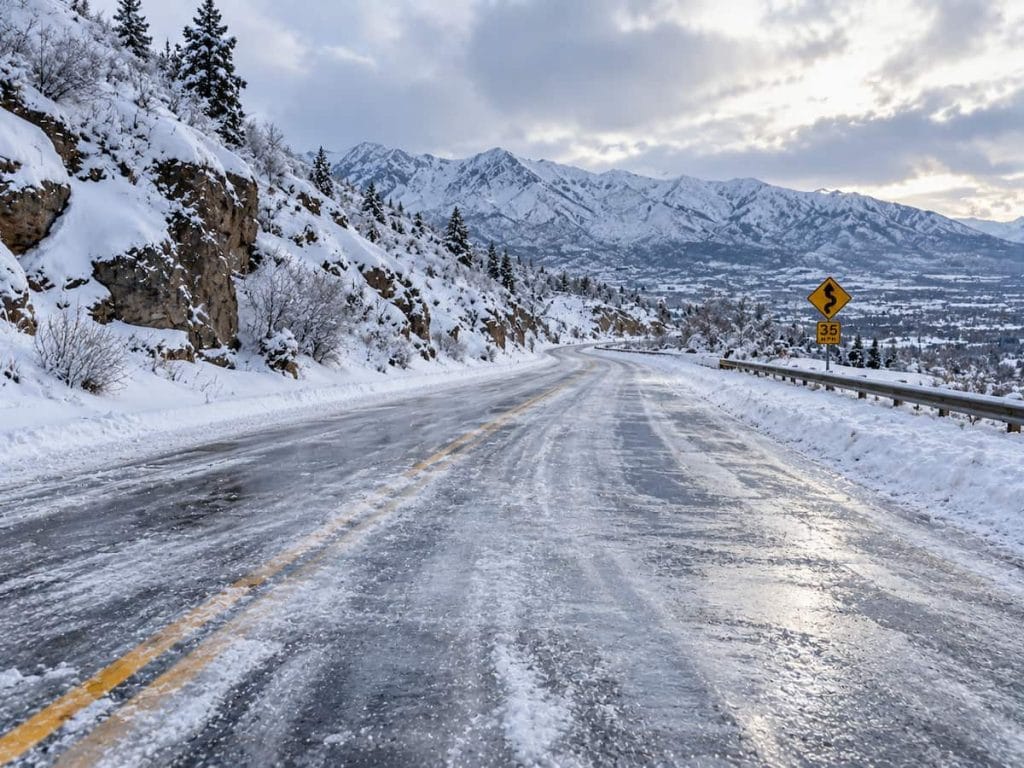
Ice, snow, and freezing temperatures create challenging conditions.
Traffic Load Matters Too
The type of vehicles using the pavement should influence the treatment recommendation.
Heavy trucks, buses, garbage trucks, delivery vehicles, and industrial equipment place more stress on pavement than passenger cars.
A resurfacing project that might be appropriate for a light-use parking lot may not be the right solution for an industrial property with a weak base and daily truck traffic.
A contractor should evaluate how the property is actually used before recommending an overlay or replacement.
Sealcoat vs. Resurface: How Do You Decide?
Sealcoating and resurfacing solve very different problems.
Sealcoating is generally considered when the asphalt remains structurally sound but shows surface aging. Resurfacing is a more substantial treatment for pavement that has enough structural support to remain in place but needs a new asphalt surface.
As a simple comparison:
- Sealcoat: Surface maintenance
- Resurface: New asphalt surface over suitable existing pavement
- Replace: Rebuild failed pavement structure
The correct choice depends on what is happening below the surface, not just how the asphalt looks.
Resurface vs. Replace: What Is the Key Difference?
The key question is whether the existing pavement structure is strong enough to support a new asphalt layer.
If the base is stable and deterioration is mostly at the surface, resurfacing may be a practical option.
If the pavement has widespread structural failure, severe settlement, unstable base material, or major drainage problems, replacement may provide a more appropriate long-term solution.
A contractor should explain why the existing pavement can or cannot remain as part of the new pavement system.
Can You Repair Some Areas and Resurface the Rest?
Yes. Many commercial paving projects use more than one treatment.
For example, a contractor may:
- Complete full-depth repairs in failed areas
- Mill portions of the pavement
- Correct drainage
- Resurface the larger parking lot
- Restripe after paving
This can make sense when most of the pavement remains structurally useful but certain sections have localized failure. The property does not always need to be treated with one method from edge to edge.
Can You Sealcoat After Asphalt Repair?
Yes, when the surrounding pavement is otherwise a suitable candidate for sealcoating.
Structural repairs should be completed first. The contractor can then evaluate cracks, surface preparation, curing requirements, and other conditions before applying sealcoat.
The goal is to repair pavement failures first and use sealcoating as maintenance afterward.

Fresh sealcoat applied after asphalt cracks have been sealed.
When Is the Best Time to Sealcoat?
If sealcoating is the right treatment, weather becomes an important part of scheduling the project. Sealcoat needs suitable temperatures and dry conditions for application and curing.
Utah’s changing spring and fall weather can narrow the available application window, while summer often provides more consistently favorable conditions.
Our article on the best time of year for asphalt sealcoating in Utah explains how temperature, precipitation, and seasonal conditions affect scheduling.
How Pavement Age Affects the Decision
Age can provide useful context, but it should not determine the treatment by itself.
Two parking lots of the same age can have very different conditions because of differences in:
- Original construction quality
- Traffic
- Drainage
- Base preparation
- Maintenance history
- Snow removal
- Sun exposure
A relatively old pavement may still have enough structural integrity for resurfacing, while a newer pavement with poor drainage or weak base material may already require extensive repair.
Condition matters more than age alone.
How Cost Differs Between Sealcoating, Resurfacing, and Replacement
Sealcoating is generally a less extensive service than resurfacing or full replacement because it treats the existing surface rather than installing a new pavement structure.
Resurfacing requires new asphalt and may include milling, repairs, tack coat, traffic control, and striping.
Replacement usually involves the most extensive work because crews may need to remove existing pavement, rebuild the base, correct drainage, grade the site, and install new asphalt.
Project cost can also depend on:
- Total square footage
- Existing pavement condition
- Base repairs
- Asphalt thickness
- Drainage work
- Milling
- Traffic control
- Project phasing
- Striping
- Site access
The least expensive treatment is only a good value when it actually matches the condition of the pavement.
Which Option Provides the Best Long-Term Value?
The best value depends on the actual condition of the property.
Sealcoating can be cost-effective when the asphalt is still structurally sound and only needs surface maintenance. Resurfacing can extend the usefulness of pavement when the underlying structure remains dependable. Replacement can be more appropriate when repeated repairs or overlays would leave serious structural problems underneath.
Choosing a less expensive treatment that does not address the real problem may lead to additional work sooner than expected.
What Should a Contractor Inspect Before Recommending a Treatment?
Before recommending sealcoating, resurfacing, or replacement, a contractor should evaluate the property as a complete pavement system.
That may include:
- Cracking patterns
- Potholes
- Rutting
- Settlement
- Drainage
- Soft spots
- Existing repairs
- Traffic patterns
- Heavy vehicle areas
- Utility trenches
- Pavement edges
- Existing grades
An inspection helps determine whether the visible deterioration is primarily a surface problem or evidence of deeper failure.
A Simple Guide: Sealcoat, Resurface, or Replace?
Sealcoat:
- The asphalt is structurally sound
- The surface is faded or oxidized
- There are only limited suitable cracks
- There are no major potholes or structural failures
- Drainage is functioning properly
Resurfacing:
- The pavement surface is significantly worn
- The underlying base remains stable
- Localized failures can be repaired first
- An overlay can be installed without trapping major structural problems underneath
- Elevations can be maintained through milling or preparation
Replacement:
- Structural failure is widespread
- The base is unstable
- There is extensive alligator cracking
- Severe rutting or settlement is present
- Repairs repeatedly fail
- Major grading or drainage corrections are needed
How Commercial Property Owners Should Approach the Decision
Commercial property managers may need to balance pavement condition, operating budgets, tenant access, appearance, and long-term capital planning.
Instead of waiting for the entire property to fail, it can be useful to divide the pavement into sections.
One parking lot may contain:
- Areas suitable for sealcoating
- Localized sections needing repair
- Areas that can be resurfaced
- Heavy-traffic sections that need reconstruction
A phased maintenance and capital plan can help property owners prioritize the most urgent work while planning future improvements.
How HOAs and Apartment Communities Can Plan the Work
HOAs and apartment communities may need to complete asphalt work while residents continue using the property.
Projects can sometimes be completed in sections to maintain access.
Property managers may need to coordinate:
- Resident parking
- Vehicle relocation
- Garbage collection
- Emergency access
- Temporary closures
- Striping
The chosen treatment can affect how long each area needs to remain closed.
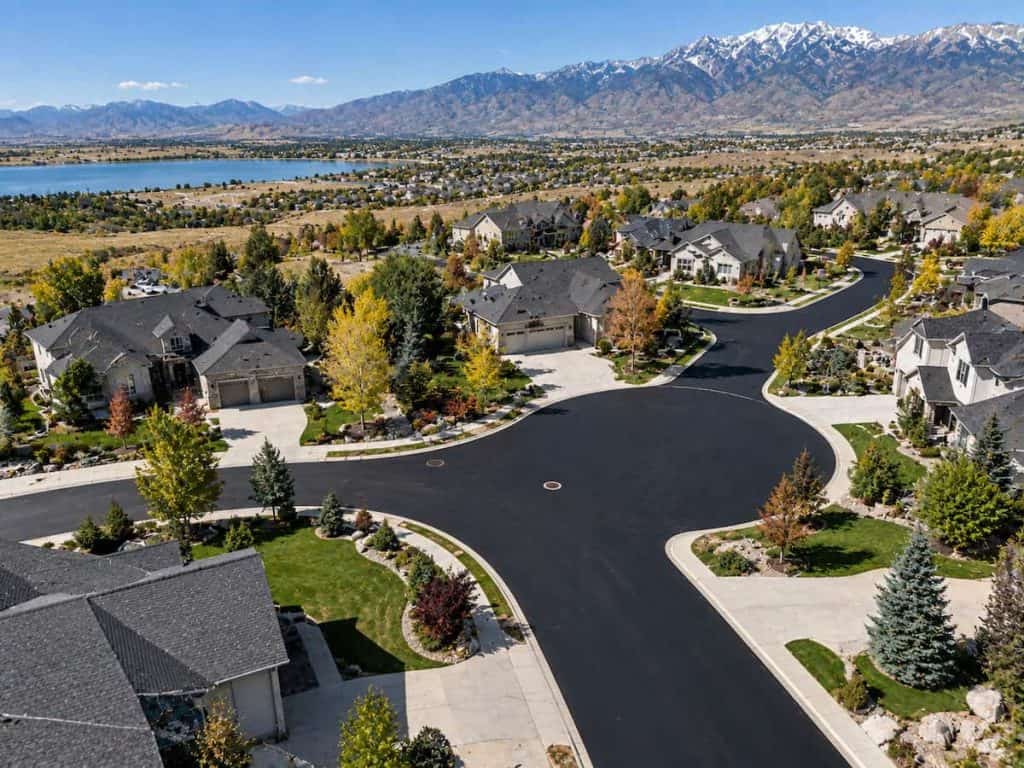
Fresh asphalt through a Utah HOA community.
Parking Lot Striping Often Comes After Resurfacing or Sealcoating
Both sealcoating and resurfacing can cover existing pavement markings.
Commercial properties may therefore need parking lot restriping before the project is complete.
New markings may include:
- Parking stalls
- Accessible parking spaces
- Access aisles
- Crosswalks
- Fire lanes
- Directional arrows
- Loading zones
Striping should be included in the project plan so the property can return to normal operation efficiently.
Questions to Ask Before Choosing Sealcoat, Resurfacing, or Replacement
When meeting with an asphalt contractor, ask questions that help clarify why one treatment is being recommended over another.
- Is the existing pavement structurally sound?
- What is causing the visible damage?
- Is the aggregate base still stable?
- Are drainage problems contributing to deterioration?
- Which areas need full-depth repair?
- Is the property a good candidate for milling and an overlay?
- Would sealcoating only improve appearance, or is it appropriate maintenance?
- What happens if we postpone the recommended work?
- Can different sections receive different treatments?
- What maintenance will be needed afterward?
A professional contractor should be able to explain the recommendation in straightforward terms.
Why Choose Eckles Paving?
Eckles Paving has more than 35 years of experience providing asphalt paving and pavement maintenance throughout Utah.
Our crews work with commercial property owners, property managers, HOAs, general contractors, developers, municipalities, schools, churches, industrial facilities, apartment communities, and homeowners.
Eckles Paving is licensed and insured and provides sealcoating, asphalt repair, patching, milling, grading, drainage solutions, asphalt paving, crack sealing, and parking lot striping.
Because our crews provide both preventive maintenance and structural pavement services, we can evaluate whether a property needs sealcoating, resurfacing, localized repair, or more substantial reconstruction rather than recommending the same service for every asphalt surface.
Eckles Paving has also earned more than 1,300 five-star reviews and maintains a 5.0 Google rating.
Learn more about Eckles Paving and our experience maintaining and rebuilding asphalt throughout Utah.
Utah Asphalt Service Areas
Eckles Paving provides asphalt paving, repair, sealcoating, resurfacing-related services, and pavement maintenance throughout Utah County, Salt Lake County, Davis County, Weber County, Cache County, Summit County, Wasatch County, Tooele County, Morgan County, Box Elder County, and surrounding areas.
Our primary service areas include Mapleton and communities throughout Utah County, Salt Lake City, West Valley City, Park City, Heber, Ogden, Logan, and many other locations throughout Utah.
Visit our Utah asphalt service areas page for more information.

An asphalt driveway provides a durable surface for a Utah home.
Frequently Asked Questions
Should I sealcoat, resurface, or replace my asphalt?
Sealcoat may be appropriate when pavement is structurally sound but showing surface aging. Resurfacing may work when the existing pavement and base remain stable but the surface needs renewal. Replacement is usually considered when structural failure, base problems, or widespread deterioration are present.
Can sealcoating fix cracked asphalt?
Sealcoat is not a structural crack repair. Suitable cracks may need professional crack sealing before sealcoat is applied, while structural cracking may require patching or reconstruction.
How do I know if my asphalt can be resurfaced?
A contractor should inspect the pavement, base stability, cracking, drainage, settlement, and previous repairs. Resurfacing generally works best when the underlying structure remains dependable.
When should asphalt be completely replaced?
Replacement may be appropriate when there is widespread alligator cracking, severe rutting, repeated potholes, major settlement, unstable base material, or drainage problems that require substantial reconstruction.
Is resurfacing cheaper than replacing asphalt?
Resurfacing is generally less extensive than full replacement because the existing pavement structure remains in place. Actual cost depends on milling, repairs, asphalt quantities, drainage, site access, and other project conditions.
Can part of a parking lot be replaced while the rest is resurfaced?
Yes. Commercial projects often use different treatments in different areas. Failed sections can be reconstructed while stable portions are resurfaced or maintained.
Should drainage problems be fixed before resurfacing?
Yes. Significant drainage problems should be evaluated before installing a new surface. Otherwise, the same water-related damage may continue underneath the new asphalt.
Related Asphalt Maintenance Resources
Property owners comparing pavement treatments may also find these Eckles Paving resources helpful:
- How Often Should You Sealcoat Asphalt in Utah?
- Asphalt Sealcoating vs. Asphalt Crack Sealing in Utah
- Best Time of Year for Asphalt Sealcoating in Utah
- How Utah Weather Damages Asphalt
You can also browse our asphalt paving tips and resources for additional information about pavement maintenance, repair, and paving.
Request a Free Asphalt Evaluation
If you are unsure whether your parking lot, private road, HOA, apartment community, commercial property, school, church, industrial facility, or driveway needs sealcoating, resurfacing, or replacement, an on-site evaluation can help identify the condition of the pavement and underlying structure.
Contact Eckles Paving for a free estimate and speak with our team about the right asphalt treatment for your Utah property.
Industry Resources
- Asphalt Institute — Technical and educational resources covering asphalt pavement construction, rehabilitation, maintenance, and performance.
- Federal Highway Administration Pavements — Federal resources related to pavement design, rehabilitation, preservation, construction, and performance.
- American Public Works Association — Industry resources related to pavement, transportation infrastructure, maintenance, and public works.